A Landmark Week for Obesity Medicine
Medicare begins covering GLP-1s for obesity. Arizona Medicaid adds Wegovy for MASH. And the FDA approves a higher-dose Wegovy. Three stories, one direction — forward.
Some weeks in obesity medicine are incremental. This was not one of them. In the span of a few days we saw a federal coverage shift, a state-level policy first, and a new FDA approval that raises the ceiling on what pharmacotherapy can do. Taken together, they point toward a system that is finally starting to treat obesity like the chronic disease it is.
This Changes Everything for Obesity Medicine
Three huge stories converged in a single week. Here’s why I think this moment really does change the landscape of obesity care — and what it means for patients and clinicians.
Medicare Finally Opens the Door on GLP-1s for Obesity
Starting July 1, 2026, Medicare will begin covering GLP-1 medications for obesity. For anyone who has worked in this space for more than a minute, that sentence is the product of more than a decade of advocacy. Part D has explicitly excluded weight-loss drugs since 2003 — an exclusion that told older adults, the population with the highest prevalence of obesity and its downstream complications, that their disease did not count. That is finally changing.
The details are still being finalized. Exact eligibility criteria, prior-authorization pathways, and patient cost-sharing will vary by plan, and Medicare Advantage carriers are likely to land in very different places on step therapy and documentation requirements. OCAN’s fact sheet is currently the cleanest summary of what we know and what is still pending.
Here is what I am telling patients in my practice right now: if you are on Medicare and think you may qualify, start building the chart. Document your weight history, your BMI trajectory, your obesity-related diagnoses (hypertension, dyslipidemia, sleep apnea, prediabetes, MASLD), and any prior attempts at treatment. When July comes, the patients who already have the paperwork will be the ones who move quickly. Clinicians: start pre-populating those notes now.
Trump’s Ozempic Price Cut, Explained
A six-minute breakdown of the Medicare announcement, what it actually covers, and where the cost-sharing pieces are still unresolved.
Arizona Medicaid Adds Wegovy for MASH — a First of Its Kind
Arizona’s Medicaid program (AHCCCS) quietly did something big this month: it added semaglutide (Wegovy) to its formulary for patients with metabolic dysfunction-associated steatohepatitis — MASH. To my knowledge, this is the first state Medicaid program to cover a GLP-1 specifically for a liver indication. It follows directly on the heels of the ESSENCE trial showing semaglutide produced MASH resolution in roughly 63% of treated patients.
MASH is the disease that made the slow-motion case for pharmacotherapy. It is common, it is underdiagnosed, it progresses to cirrhosis and hepatocellular carcinoma, and until very recently we had essentially nothing to offer beyond “lose weight.” Covering a drug that both treats the obesity driving the disease and produces histological improvement is exactly the kind of disease-modifying move that should be the template, not the exception.
Practical notes for Arizona clinicians: the coverage requires a confirmed MASH diagnosis with appropriate documentation, so if you are managing patients with suspected MASH, this is the moment to finish the workup — noninvasive scoring, elastography, and, where indicated, biopsy. For patients: if you live in Arizona, have obesity, and have been told you have fatty liver disease or MASH, ask your clinician whether AHCCCS coverage now applies to you.
My hope is that other state Medicaid programs watch what happens here. Arizona is running an experiment the rest of us will learn from.
FDA Approves a Higher-Dose Wegovy (7.2 mg) — More Room to Respond
On March 19, 2026, the FDA approved a 7.2 mg dose of Wegovy (semaglutide) after a 54-day expedited review. The new dose is aimed at patients who have done everything right on 2.4 mg — adherence, lifestyle work, sufficient time — and have simply plateaued. Until now, our only options in that scenario were to switch agents, add on, or accept the plateau. 7.2 mg gives us a fourth option: push the same molecule further.
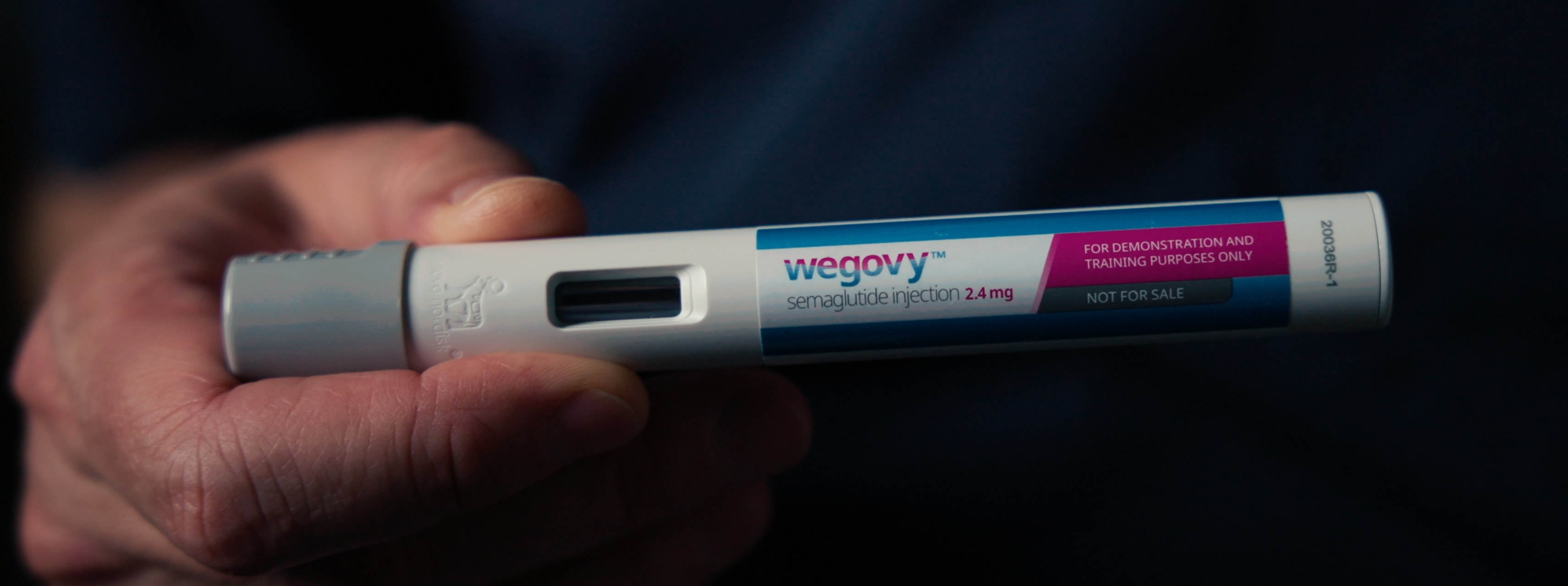
Novo Nordisk plans a U.S. launch in April 2026 through the usual distribution channels — CVS, Costco, telehealth platforms, GoodRx — with cash pricing still to be announced. The approved label positions 7.2 mg as a step up after at least four weeks on 2.4 mg; there is no intermediate dose between the two. The GI side-effect profile tracked with what we would expect from the lower doses, but one signal worth watching is dysesthesia — unusual skin sensations — which occurred in about 22% of 7.2 mg patients versus 6% at 2.4 mg. It typically resolves, and the FDA is continuing to look at it.
Two things to keep in mind clinically. First, a higher dose is not a shortcut. The patients most likely to benefit are the ones who have already plateaued on an adequate trial at 2.4 mg, not people looking to accelerate early weight loss. Second, we are finally in a world where we can titrate obesity pharmacotherapy the way we titrate insulin or blood pressure medications — matching drug to patient response over time. That is a real change in the posture of the field.
A federal coverage expansion, a state Medicaid program leading on MASH, and a higher-dose pharmacotherapy option all arrived inside the same week. Individually, any one of these would have been a headline. Together, they signal a system beginning to behave as if obesity is actually a disease.
What I will be watching next: how Medicare Advantage plans write their prior-authorization rules, whether other state Medicaid programs follow Arizona’s lead on MASH, and how quickly 7.2 mg Wegovy reaches the plateaued patients who need it.