Modifying Disease with Obesity Treatment
Evidence that obesity treatment actually modifies other diseases — a new oral GLP-1, psychiatric outcomes, migraines, and cardiovascular prevention.
Timmarie, one of my patients, described this approach as "the diagnosis that saved me." When we treat obesity itself, we end up modifying a long list of other diseases at the same time — and the evidence keeps stacking up. Four stories this week make that case.
The Diagnosis That Saved Me — Episode 6
Timmarie's full story, in her own words. The line that opens this newsletter is hers — this is the full conversation behind it. Watch before you read on, or save it for after the four research stories below.
FDA Approves Another Oral GLP-1 Pill for Weight Loss
Source: Eli Lilly Press Release, April 1, 2026 · FDA.gov
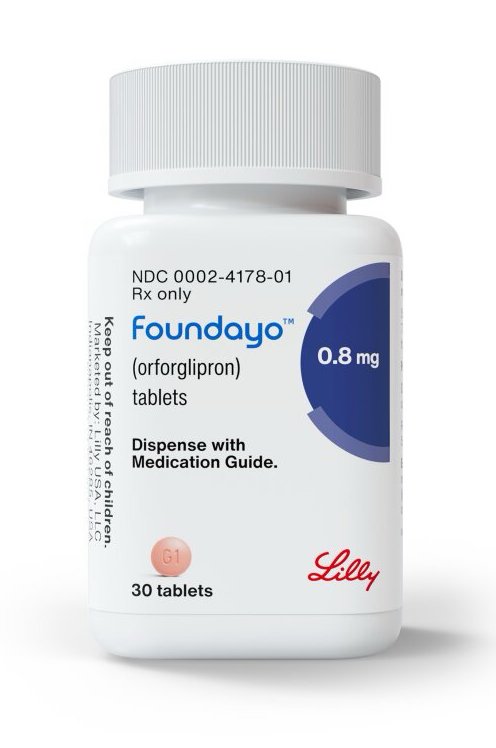
In a landmark decision, the FDA today approved Foundayo (orforglipron) by Eli Lilly — a once-daily GLP-1 receptor agonist for chronic weight management. Unlike the recently approved Wegovy pill, orforglipron is a small-molecule pill with no food or water restrictions, making it more convenient for patients. In the ATTAIN-1 trial, patients lost up to 12.4% of their body weight at 72 weeks, and in a head-to-head comparison (ACHIEVE-3), orforglipron was superior to oral semaglutide. Perhaps most remarkably, the FDA completed its review in just 50 days — the fastest novel drug approval since 2002.
Pricing is a game-changer: Lilly has set the list price at $149/month self-pay, $25/month with commercial insurance, and $50/month for Medicare Part D beneficiaries starting July 1. The medication will be available through LillyDirect beginning April 6, with retail pharmacy availability to follow. This is an enormous step forward for patients who want an effective, affordable oral option for weight management.
GLP-1s Linked to Lower Risk of Psychiatric Decline
Source: Taipale H, Taylor M, Lähteenvuo M, et al. Lancet Psychiatry. 2026;13(4):327-335
A Swedish national cohort study has found that GLP-1 receptor agonists — semaglutide in particular — are associated with a reduced risk of worsening psychiatric symptoms in patients who already have depression or anxiety disorders. This is an encouraging finding for patients managing both metabolic and mental health conditions, and it adds to a growing body of evidence that these medications may have benefits extending well beyond blood sugar and body weight.
One important caveat: cohort studies can't prove that the treatment is what caused the improvement — they show associations that we can test more rigorously in future trials. But the signal is consistent enough now that it deserves a real prospective look.
Can GLP-1s Help with Migraines?
Source: Medscape Medical News, Megan Brooks, March 11, 2026
Real-world data now suggest that GLP-1 receptor agonists may reduce emergency care visits and the need for additional migraine treatments in adults with chronic migraine. While more research is needed, this is a welcome signal for the millions of Americans living with chronic migraines who are looking for better options.
If you suffer from migraines and are already taking a GLP-1 medication for another condition, this is worth bringing up with your provider — particularly if your headache pattern has changed since starting therapy.
GLP-1 Drugs Gain Ground in Heart Disease Prevention
Sources: American College of Cardiology · JAMA Oncology matched cohort study
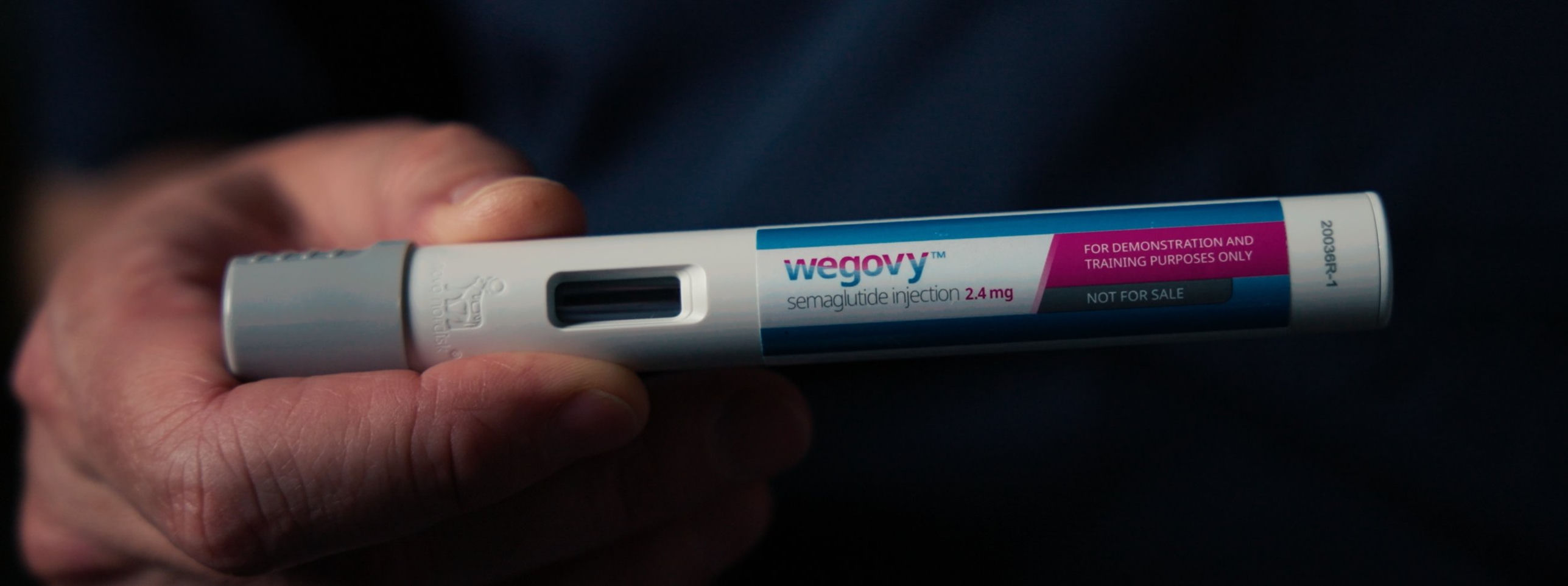
The cardiovascular benefits of GLP-1 medications are becoming harder to ignore. A review of clinical trial data shows that GLP-1 drugs significantly reduce major adverse cardiovascular events — and notably, these benefits appear to extend beyond what weight loss alone can explain. Even early-generation GLP-1 drugs that didn't cause much weight loss still reduced heart attacks, strokes, and cardiovascular deaths by around 20%. Semaglutide and efpeglenatide showed the strongest effects, with reductions of 26% and 27% respectively.
The American College of Cardiology now recommends considering GLP-1s as a first-line option for weight management in patients with obesity to lower cardiovascular risk. Meanwhile, a JAMA Oncology study of over 86,000 matched patients found that those taking anti-obesity medications had a 17% lower overall cancer rate, with especially striking reductions in endometrial cancer (25%), ovarian cancer (47%), and meningioma (31%).
The pattern is becoming impossible to miss: when you treat obesity at the level of the underlying biology, you don't just lower a number on the scale — you change the trajectory of multiple diseases at once. That's the diagnosis that saved Timmarie. It's saving more people every week.